he is a born politician'
Interview with the Director of the Economic and Commercial Office of the Embassy of Spain in Budapest
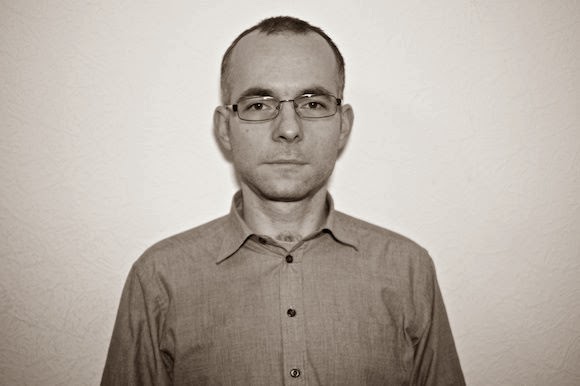
Rafael Márquez Molero, economist and director of the Economic and Commercial Office of the Embassy of Spain in Budapest, took up his position more than one year ago. Through his studies in economics and experience in foreign trade during this period of time, Rafael han been able to form an overall idea about the political economic situation of the Magyar country which he shares with us today.
What do you think about the current Hungarian government policy on foreign investment in the private sector in Hungary?
Orbán is a born politician, he keeps the perfect balance of hot and cold. On the one hand he reaches out to the capital that is in Hungary and on the other hand he wears a suit of intervention. Since the summer of 2013, the Hungarian Government has signed over thirty strategic cooperation agreements with foreign capital companies such as Mercedes or Audi, in order to facilitate foreign investment in Hungary. But at the same time, prevents the monopolization of certain essential sectors for the development of the country, such as the ones that supply gas, energy and water. As a result, the Hungarian prime minister ruled last year a reduction of rates for these public services by 20% compared to the prices they had in 2012.
What is the reason behind this need to strengthen the presence of the Hungarian stat in the private sector?
It is a kind of approach very close to what promoted communism, for which society is the essential and where profit is discarded. This country did not have a wastewater treatment and filtering system, so that, about two years ago, the Government decided to turn this activity into a public service. As a result of these measures, all these companies must have at least 50% of the Hungarian capital to be controlled by the Hungarian state. The result is that many of them have closed and have left the country.
How does this type of policy influences on foreign investment in Hungary?
This attitude creates some uncertainty of the future of the country and the economy, especially in sectors such as banking and energy. Foreign investment could help to improve the country, but it retracts when it does not see a stable future outlook. It has not yet defined the ability to repatriate profits, which in principle does not happen between EU countries. So obviously, if an employer sees his/her decision-making power limited (repatriate profits, capitalize and expand the business) by a rule or a policy change, this slows foreign investment.
"To believe that a crisis requires a certain figure is risky and usually ends badly"
It seems that this is a nationalization plan, but Viktor Orbán never mentions this term in his speeches.
Orbán does not like the word “nationalization”, but it is more of a political stance that economic background. Perhaps he does not want to use this term because it brings an image back to the situation prior to democracy, which means communism, when everything was state owned.
But nationalization does not mean to only expropriate private ownership to a public company, nationalization means that the property becomes part of the State, and it does not matter to talk about nationalizing or statalizing, it is the same thing.
An article published by Le Monde Diplomatique in April 2013 compared Charles De Gaulle with the Hungarian Prime Minister, do you think that Hungarians need a strong leader like Orbán to move the country forward?
The “motherland-saviours” are always dangerous. People need freedom and sufficient conditions of knowledge and involvement in politics to decide for themselves. Believing that a situation of crisis, political or economic, requires a certain figure or a certain group of people is risky and usually ends badly. There is no perfect political system, but states like Switzerland, where democracy is more diluted and less personalized, and general participation is much higher, are a good example of democratic development. Unfortunately, in Hungary we are still very far from that.
How do you see Hungary in the coming years?
As part of the European Union, its destination can not be very different from any other EU country due to the high level of economic integration. Hungary may take longer to trace because it comes from a worse situation. It joined the EU in 2004, which included changing an economic infrastructure of a totalitarian communist country to a capitalist State structure, and when it began to improve, in 2008 the crisis came. Its democratic and market economy journey is short, and that was terrible for Hungary. However, although the current situation is extremely unfavorable, I am optimistic and as other community partners will improve their situation, the chances for the Magyar country will improve significantly in the coming years.
Amelia Ochoa
proofread by Paul Thomas